💧 How to Get the Wet Mutation in Grow a Garden (Roblox)
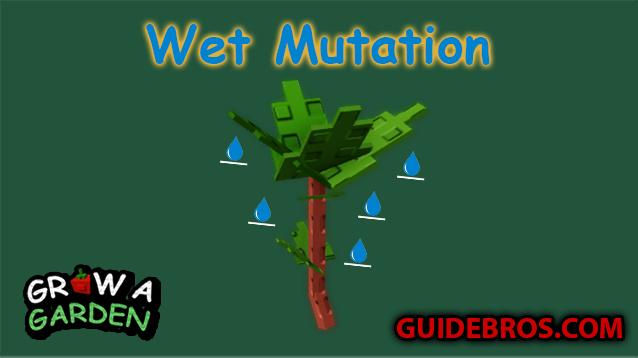
The Wet Mutation gives your crops a refreshing “water-droplet” effect—tiny glistening drops trickle off, making them look damp and lush. 🌿💦
💲 Benefit: It doubles (2×) the sell value of your crops!
🌧️ How to Obtain the Wet Mutation
1️⃣ Rain or Thunderstorm Weather
- During rain, fully-grown exposed crops have a 50% chance to gain the Wet mutation.
- Rain also speeds up crop growth by 50%—perfect for quick harvests and replanting.
2️⃣ Sprinklers and Helpful Pets
- Sprinklers can apply Wet even when there’s no rain. 🚿
- The Sea Turtle (or “Kappa” pet) sprays water on nearby crops about every 8 minutes, giving them the Wet mutation. 🐢💧
3️⃣ Admin or Event Effects
- Special events like the “Under the Sea” event can apply Wet mutation to your crops without weather conditions.
📊 Quick Summary Table
| Method | Details |
|---|---|
| 🌧️ Rain / Thunderstorm | 50% chance per crop; also speeds up growth |
| 🚿 Sprinklers | Occasionally apply Wet even in clear weather |
| 🐢 Sea Turtle / Kappa Pet | Applies Wet every ~8 minutes to nearby crops |
| 🎉 Admin / Event | Forces Wet mutation during special events |
💡 Pro Tips
- ⏳ Plant high-value crops right before forecasted rain to benefit from both faster growth and the Wet mutation.
- 🐢 Keep a Sea Turtle (or Kappa) pet to maintain a steady flow of Wet crops, even on sunny days.
- ❄️ Combine Wet + Chilled during Frost weather to create Frozen crops (10× multiplier).
- 🌈 Stack Wet with rare mutations like Golden or Rainbow for massive boosts (e.g., Wet + Rainbow = 100× value).
🚀 Quick Walkthrough
- Watch the weather—rain is your best friend for Wet crops.
- Use sprinklers or pets to keep Wet going when skies are clear.
- Experiment with mutation combos like Wet + Chilled → Frozen for huge profits.
🔍 TL;DR
Wet Mutation = 2× crop value + pretty water effects. Get it from rain (50% chance), sprinklers, Sea Turtle/Kappa pet, or special events. Use Wet wisely—it’s the first step toward the most lucrative crop mutations in the game! 💰🌿
Helpful Guide?
Sharing helps us create more pro-level content for you!