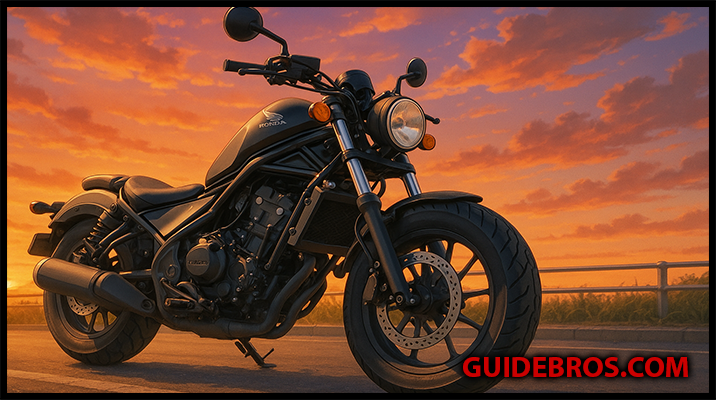
Honda Rebel 300 specs and features make it a practical entry-level cruiser with reliable performance, smooth handling, and strong fuel efficiency.
Overview
The Honda Rebel 300 is widely recognized as one of the most dependable lightweight cruiser motorcycles available today. Designed for new riders and daily commuters, it combines a simple engine layout with predictable handling and modern styling. Its low seat height and manageable weight help riders build confidence quickly, especially in busy city traffic. Many owners choose this motorcycle because of its long-term durability and affordable operating costs. With steady fuel efficiency and smooth acceleration, the bike performs well for both weekday travel and relaxed weekend rides.
Honda Rebel 300 Key Specifications and Performance Details
| Specification | Details |
|---|---|
| Engine | 286cc, liquid-cooled, single-cylinder DOHC |
| Horsepower | ~27 hp @ 8,000 rpm |
| Torque | 27 Nm @ 6,500 rpm |
| Transmission | 6-speed manual |
| Seat Height | 690 mm (27.2 inches) |
| Curb Weight | 165 kg (364 lbs) |
| Fuel Tank Capacity | 11.2 liters |
| Fuel Economy | ~30–35 km/L |
Main Features That Define the Honda Rebel 300 Riding Experience
Low Seat Height and Rider Confidence
One of the strongest advantages of the Honda Rebel 300 beginner motorcycle is its low 690 mm seat height. This allows riders to place both feet firmly on the ground, improving balance and control during stops. In heavy traffic or crowded parking areas, this feature significantly reduces stress for new riders. It also makes the motorcycle suitable for shorter riders who may struggle with taller sport bikes. Confidence during slow-speed maneuvers is often the deciding factor when choosing a first motorcycle.
Fuel Efficiency for Daily Commuting
The Honda Rebel 300 fuel economy rating of approximately 30–35 km/L makes it a practical choice for daily transportation. With an 11.2-liter fuel tank, riders can typically travel over 300 kilometers on a single fill-up under normal conditions. This efficiency reduces long-term operating expenses, especially for riders who commute five or six days each week. Lower fuel consumption also means fewer stops at gas stations and more consistent travel planning. Many owners report stable mileage even after years of regular use.
Lightweight Handling and Urban Control
At 165 kg curb weight, the motorcycle remains easy to control in tight city streets. Riders can perform slow turns, lane filtering, and parking adjustments with minimal effort. The lightweight design also reduces fatigue during long rides. This balance between stability and agility is a key reason the model remains popular among commuters and new riders. Consistent handling helps riders build safe habits early in their riding journey.
Strategic Riding Tips for Better Performance and Longevity
Maintain Smooth Throttle Control
Gradual throttle input improves fuel efficiency and reduces engine wear over time. Sudden acceleration can increase fuel consumption and shorten tire life. Keeping a steady riding pace helps maintain stable engine temperature and smoother gear transitions. Riders who adopt controlled acceleration often notice better mileage and longer service intervals. This habit also improves passenger comfort and overall riding safety.
Perform Regular Maintenance Checks
Routine inspection of engine oil, chain tension, tire pressure, and brake pads ensures consistent performance. Many experienced riders follow a monthly inspection schedule to prevent unexpected issues. Clean lubrication of the chain reduces friction and improves power delivery to the rear wheel. Regular maintenance also protects resale value and reliability. Preventive care remains the most effective way to extend the motorcycle's lifespan.
Advantages and Disadvantages Analysis From an Efficiency Perspective
Advantages
The Honda Rebel 300 lightweight cruiser offers excellent fuel economy, predictable handling, and dependable engine reliability. Its simple mechanical design keeps maintenance costs low compared to larger motorcycles. Riders benefit from comfortable seating posture and easy maneuverability in urban areas. The motorcycle also maintains stable performance in various weather conditions. These strengths make it a reliable long-term transportation solution.
Disadvantages
While efficient and reliable, the motorcycle produces moderate power compared to higher-displacement models. Riders who frequently travel on highways may desire stronger acceleration for overtaking. Limited storage capacity also requires additional accessories for long-distance travel. Wind protection is minimal due to the cruiser-style design. These limitations are typical for entry-level cruiser motorcycles.
Efficiency Perspective and Real-World Ownership Costs
Ownership costs for the Honda Rebel 300 daily commuter motorcycle remain relatively low compared to most mid-size bikes. Fuel efficiency reduces weekly transportation expenses, while affordable spare parts simplify routine maintenance. Insurance premiums are typically lower due to the moderate engine size. Tire wear remains manageable because of the bike’s lighter weight. Over several years of ownership, these savings can become significant.
Frequently Asked Questions About the Honda Rebel 300
Q: Is the Honda Rebel 300 suitable for beginner riders?
A: Yes. The motorcycle is widely recommended for beginners due to its low seat height, predictable throttle response, and manageable weight. These features help new riders develop safe riding skills quickly.
Q: How far can the Honda Rebel 300 travel on a full tank?
A: With fuel economy averaging 30–35 km/L and an 11.2-liter tank, the motorcycle can usually travel around 300 kilometers before refueling under normal riding conditions.
Q: What type of rider benefits most from this motorcycle?
A: Daily commuters, beginner riders, and individuals seeking a fuel-efficient cruiser often benefit the most. The bike performs reliably in city traffic and short highway trips.
Q: Is maintenance expensive for the Honda Rebel 300?
A: Maintenance costs are generally low because the engine design is simple and widely supported. Regular oil changes, chain lubrication, and brake checks keep the motorcycle running smoothly.
Helpful Guide?
Sharing helps us create more pro-level content for you!