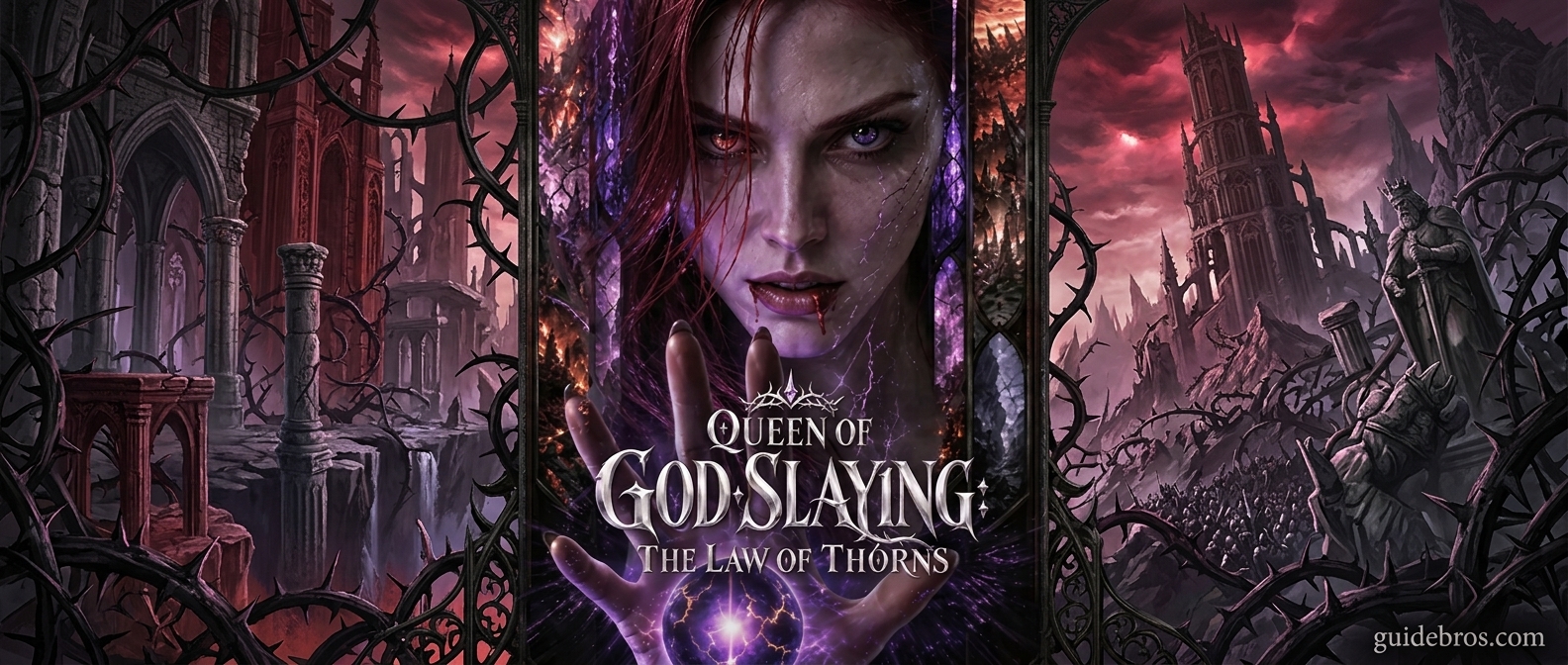
Queen of God-Slaying is a fantasy revenge story about a betrayed queen who returns to the past to challenge false gods and reclaim her power.
Overview
Queen of God-Slaying follows Hela, the Queen of the Underworld, after she is betrayed and killed by Loken, a descendant of a false god. With help from the goddess Freyja, Hela returns ten years into the past with a chance to change her fate. She exposes Loken's lies, forms an alliance with the exiled God of War, Kael, and uncovers a conspiracy involving a powerful priestly family. Her journey leads to the rescue of the Goddess of Winter, the creation of a god-slaying blade, and a battle against the ancient fire god Surtr. As the threat of Ragnarök grows, Hela must use her strength and her allies to protect her realm and build a new future.
What Is Queen of God-Slaying About?
Queen of God-Slaying is a fantasy revenge drama built around betrayal, rebirth, divine power, and the struggle to change a tragic future. The closest matching series listing describes Hela as the Queen of the Underworld, a ruler whose life is destroyed by someone she once trusted. Her death is not the end of her story. With help from the goddess Freyja, she receives another chance to return to the past and confront the people responsible for her suffering.
Hela's second chance gives her an advantage that she did not have before. She understands the danger of trusting the wrong people, and she has a reason to question the stories that powerful figures tell about themselves. Instead of allowing Loken to control her fate again, she begins exposing his lies and removing the privileges that protect him.
Her plan soon becomes larger than personal revenge. Hela joins forces with Kael, an exiled God of War, and becomes involved in a conspiracy connected to a priestly family. The conflict draws other divine figures into the story, including Skadi, the Goddess of Winter, while the threat of Surtr introduces a danger that could affect the entire realm.
The god-slaying weapon is an important part of the conflict because it offers a way to challenge a powerful ancient enemy. Hela's goal is no longer only to punish the people who betrayed her. She must help stop a larger disaster and decide what kind of future she wants after reclaiming her place in the divine world.
Queen of God-Slaying Plot Summary
Hela's Betrayal and Death
Hela begins as the Queen of the Underworld, a position that gives her power and status. Yet her authority does not protect her from betrayal. Loken, described as a descendant of a false god, turns against her and brings about her brutal death.
This opening establishes the central problem: power alone cannot guarantee safety when trust is placed in the wrong person. Hela may rule a realm, but the people around her can still manipulate events for their own benefit. Her downfall shows how a hidden agenda can be more dangerous than an open enemy.
Loken's role is especially important because his connection to a false god raises questions about legitimacy. In a world where divine blood and status carry great weight, a false claim to power can allow someone to gain protection and influence they do not deserve. Hela's revenge therefore becomes a fight against both personal betrayal and the lies that support it.
Her death also gives the story a clear emotional starting point. The audience sees what she has lost and understands why she cannot simply return to her old life without making changes. When a second chance becomes possible, Hela has a reason to approach her enemies differently.
Freyja Gives Hela a Second Chance
The goddess Freyja helps Hela return to a point ten years before her death. This change gives Hela the chance to act on knowledge gained through suffering. Instead of waiting for the same betrayal to happen again, she can challenge the people and systems that allowed it to succeed.
Time reversal is an effective device in revenge fantasy because it creates a contrast between what the hero knows and what other characters believe. Hela remembers the consequences of decisions that have not yet happened in the new timeline. She can use that knowledge to avoid old mistakes, question suspicious behavior, and prepare for threats before they become impossible to stop.
However, returning to the past does not mean that every future event will unfold exactly as before. When Hela changes one decision, other characters may respond differently. Her enemies may become more cautious, and allies may need new reasons to trust her. This creates tension because her knowledge is valuable, but it does not remove every uncertainty.
Freyja's role also connects Hela's personal struggle to the wider divine world. The second chance is not only an opportunity for revenge. It gives Hela a chance to challenge a larger threat before the consequences reach the whole realm.
Hela Exposes Loken's Lies
After returning to the past, Hela begins stripping Loken of the privileges that protect him. She also exposes his false claim that he was her savior. This move changes the balance between them because Loken can no longer rely on the same public story to maintain his position.
Rather than attacking without a plan, Hela focuses on weakening the image that gives Loken influence. This is a useful strategy in a world where reputation, family connections, and divine status can be as powerful as physical strength. If people stop believing his claims, he may lose access to the support that once made him dangerous.
Her approach also shows that revenge can involve more than defeating an enemy in battle. Hela wants the truth to be known, and she uses information to challenge the false story that helped Loken gain power. This makes her comeback a struggle over both strength and legitimacy.
Even so, exposing a lie does not automatically remove every threat. Loken may still have allies, resources, and ways to retaliate. Hela must continue to plan carefully if she wants her early victories to lead to a lasting change.
Hela Forms an Alliance with Kael
Hela's path brings her together with Kael, an exiled God of War. Their alliance gives her access to another powerful figure who has his own reasons to challenge the existing order. Rather than trying to face every enemy alone, Hela recognizes the value of working with someone whose abilities can support her goals.
Kael's position as an exile also creates a connection between the characters. Both have reasons to question the people who hold power, although their experiences and motives are not necessarily the same. Their partnership can develop through shared danger, mutual respect, and the need to decide whether the other person can be trusted.
The alliance is more than a way to increase the number of fighters on Hela's side. It gives the story room to explore how two powerful characters handle conflict and cooperation. They may need to disagree about methods while remaining focused on the same larger threat.
The relationship between Hela and Kael is also part of the series' fantasy romance element. Their connection develops in a world where betrayal and danger make trust difficult. The strongest partnership will depend not only on power but also on whether they can respect each other's choices and work toward a shared goal.
The Priestess Family's Conspiracy
As Hela's plans move forward, she uncovers a conspiracy involving a powerful priestly family. This discovery expands the story beyond the conflict with Loken. It suggests that the forces threatening Hela may be connected to a larger network of people who benefit from deception and control.
The conspiracy matters because defeating one enemy may not solve the problem if the system that supports that enemy remains in place. Hela must learn who is involved, how the plan works, and which people can be trusted. Acting too quickly could allow the conspirators to hide evidence or turn the situation against her.
Hela uses Loken as bait through a master-servant contract, making the relationship itself part of her strategy. This move shows that she is willing to use the enemy's position to draw out other threats. It also creates risk because a plan involving an untrustworthy person can become difficult to control.
The conspiracy gives the story a mystery element. The question is no longer only whether Hela can defeat the person who killed her. She must also discover how far the scheme reaches and whether the people behind it are connected to the danger facing the divine world.
Rescuing Skadi, the Goddess of Winter
Hela's journey includes rescuing Skadi, the Goddess of Winter. This part of the story shows that Hela's actions can affect divine figures beyond her immediate circle. Her struggle becomes connected to the safety of other powerful beings and the balance of the wider realm.
The rescue also reinforces the importance of allies. Even a strong character may not be able to solve every problem through direct combat. Hela must recognize when another person needs help and decide how to use her resources to reach that goal.
Skadi's involvement broadens the world of the drama by introducing another divine figure with her own identity and role. It also helps prepare the story for a larger conflict, because the threat of an ancient god cannot necessarily be handled by one person working alone.
The God-Slaying Blade and the Battle Against Surtr
One of the major developments is the creation of a god-slaying blade to face Surtr, the ancient fire god. The weapon represents a turning point because it provides a way to challenge an enemy whose power may be beyond the reach of ordinary attacks.
The idea of a weapon designed to slay a god carries special meaning in a fantasy story. Gods are often treated as beings beyond the reach of ordinary people, protected by supernatural strength and their place in the world's order. A god-slaying weapon challenges that assumption and creates the possibility that even an ancient power can be defeated.
However, possessing a powerful weapon does not guarantee victory. Hela and her allies still need to use it at the right time and understand the danger they face. Their preparation, teamwork, and ability to respond when a plan changes can matter as much as the blade itself.
The confrontation with Surtr raises the stakes from revenge to survival. If the ancient fire god succeeds, the consequences could extend far beyond Hela's personal future. The struggle becomes a fight to prevent Ragnarök and protect the realm from destruction.
Ending the Threat of Ragnarök
The story's final conflict brings Hela and Kael together against the ancient god. Their soul resonance allows them to defeat Surtr and bring an end to Ragnarök. The result is not simply a victory over one enemy. It creates the possibility of a different future for the Underworld and the people who live within it.
The ending connects the personal and larger conflicts. Hela begins the story as a betrayed queen who receives another chance to change her fate. By the end, her actions affect the balance of the divine world. She has challenged the lies that protected her enemies, uncovered a conspiracy, and faced a threat capable of bringing about a wider catastrophe.
Hela and Kael eventually rule Helheim together. Their new position suggests that the story's conclusion is about more than revenge. They must move forward after the war and decide how to use the power they have reclaimed. A successful ending requires not only defeating an enemy but also building something more stable in its place.
Main Characters in Queen of God-Slaying
Hela: The Queen Who Refuses to Stay Defeated
Hela is the central character and the driving force behind the story. Her return to the past gives her knowledge that can change events, but her real strength lies in how she uses that opportunity. She exposes lies, creates alliances, and takes action against enemies who once controlled her fate.
Her character is appealing because she combines determination with planning. She does not rely only on anger after her betrayal. She studies the people around her and works to remove the advantages that make them dangerous. Her journey shows that strength can include patience, clear judgment, and the willingness to ask for help.
Kael: The Exiled God of War
Kael becomes Hela's ally in the struggle against their enemies. His position as an exiled God of War suggests that he stands outside the accepted order and has reasons to question those who control it. His alliance with Hela gives both characters a chance to combine their strengths against a larger threat.
His role is also important to the romance and ending. The soul resonance between Hela and Kael becomes part of the final battle against Surtr. Their victory shows that cooperation can achieve what individual power may not be able to accomplish alone.
Loken: The False Savior
Loken is the enemy whose betrayal sets Hela's revenge in motion. His claim that he was Hela's savior is exposed as a lie, showing how he uses a false story to protect his position. Hela's decision to challenge his privileges attacks the public image that helps him maintain power.
Loken also represents the danger of trusting appearances. In a world shaped by divine status, a convincing story can hide selfish motives. Hela's second chance allows her to confront the difference between what Loken claims to be and what his actions reveal.
Freyja and Skadi: Divine Allies
Freyja helps Hela return to the past, making the entire second-chance storyline possible. Skadi, the Goddess of Winter, becomes another important figure when Hela works to rescue her. Their roles show that Hela's journey depends on connections with other divine beings as well as her own strength.
These characters also expand the story's world. Their presence suggests that the divine realm contains different powers and interests, and that the conflict cannot be understood through Hela and Loken alone.
What Makes Queen of God-Slaying Interesting?
1. Rebirth Gives the Heroine a Strategic Advantage
Hela returns to the past with knowledge of a future she wants to avoid. This creates a strong reason to follow her decisions because viewers can see how she uses information to change the balance of power. The tension comes from whether she can prevent familiar dangers when other characters do not know what is coming.
2. Revenge Is Connected to a Larger Mystery
The conflict begins with Loken's betrayal but expands into a conspiracy involving a priestly family. This prevents the story from remaining a simple series of confrontations. Hela must discover who is involved and why the plot exists before she can be certain that the threat has ended.
3. The Heroine Uses More Than Physical Strength
Hela challenges her enemies through information, alliances, and careful planning. Her use of Loken as bait shows that she can turn an enemy's position into an opportunity. This makes her victories more interesting than a straightforward contest of power.
4. The Final Battle Has Wider Consequences
The fight against Surtr is connected to the threat of Ragnarök, raising the stakes beyond Hela's personal revenge. Her success affects the future of Helheim and the divine world. This gives the story a clear progression from personal betrayal to a struggle with much larger consequences.
Pros and Cons of Queen of God-Slaying
Pros
- Strong heroine: Hela takes an active role in changing her fate rather than waiting for others to rescue her.
- Clear revenge motivation: Her betrayal and return to the past provide a direct reason for her actions.
- Fantasy world: Gods, divine realms, magical weapons, and Ragnarök create a rich setting for the conflict.
- Strategic choices: Hela uses alliances and information instead of relying only on combat.
- Mystery and conspiracy: The priestly family's plot adds questions beyond the main betrayal.
- Romance and teamwork: Hela and Kael's alliance develops alongside the fight against a larger threat.
Cons
- Many divine characters: Viewers may need time to understand each character's role and loyalties.
- Fast pacing: Short-form dramas can move quickly through major revelations and battles.
- Complex mythology: Terms such as Helheim and Ragnarök may need context for viewers unfamiliar with Norse-inspired fantasy.
- Revenge drives many choices: Viewers who prefer quiet character studies may find the focus on conflict intense.
- Powerful weapons can change the balance quickly: The story needs to establish clear limits so that victories continue to feel earned.
Efficiency Perspective: How Hela Plans Her Revenge
Hela's second chance is most useful when she treats it as an opportunity to make better decisions rather than simply repeat the actions that led to her first defeat. She knows that Loken's lies and the support around him played a role in her downfall. By challenging his public image and removing his privileges, she targets the conditions that made him dangerous.
A practical strategy is to identify the source of an enemy's power. That source might be physical strength, political support, a false reputation, access to resources, or control over information. Hela does not need to defeat every enemy in a direct fight if she can weaken the support that allows them to act without consequences.
Her alliance with Kael follows the same principle. A larger threat requires more than individual effort, so working with a powerful ally increases their options. However, an alliance is only effective when both sides understand their goals and can rely on each other's decisions. Trust must be built through action, especially when both characters have reasons to question the existing order.
The conspiracy also shows why gathering information matters. If Hela attacks before understanding the full plan, she may defeat one opponent while leaving the larger threat untouched. Using Loken as bait is a risky way to draw out hidden enemies, so she must consider what could go wrong and whether the information gained is worth the danger.
Finally, the battle against Surtr shows that preparation must lead to action. A god-slaying blade gives Hela and Kael a tool for the final fight, but success still depends on how they use it together. The story's strategy is therefore based on several connected steps: learn from the past, identify the real source of danger, build reliable alliances, prepare the right tools, and act when the opportunity appears.
Who Should Watch Queen of God-Slaying?
Queen of God-Slaying may appeal to viewers who enjoy fantasy revenge dramas, powerful heroines, time reversal, divine battles, and mythological romance. Hela's journey combines a personal reason for revenge with a larger mission to stop an ancient threat. The story also offers mystery through the conspiracy surrounding Loken and the priestly family.
Viewers who like strategic characters may enjoy how Hela uses knowledge and alliances to change her future. Fans of mythology-inspired fantasy may appreciate the presence of Helheim, Skadi, Surtr, and Ragnarök. Those who enjoy romance alongside action may also be interested in Hela and Kael's growing partnership.
The story may be less suitable for viewers who prefer realistic settings or slow, detailed world-building. Its focus is on supernatural conflict, divine power, and fast-moving plot developments. Watching the series in order can help viewers keep track of the characters and understand how the conspiracy connects to the final battle.
Where to Watch Queen of God-Slaying
The closest matching series listing I found is The Queen of the Underworld's Revenge on GoodShort. Its listing describes Hela's betrayal, return to the past, alliance with Kael, and battle against Surtr. The page lists 70 episodes.
Because the title supplied here is Queen of God-Slaying, confirm that the listing matches the series you want before watching. Episode availability, language options, and viewing conditions can change, so check the platform's current information.
Frequently Asked Questions
What is Queen of God-Slaying about?
The closest matching story follows Hela, Queen of the Underworld, after Loken betrays and kills her. Freyja sends her ten years into the past, giving her a chance to expose Loken's lies, work with Kael, and uncover a conspiracy. Her journey eventually leads to a battle against Surtr and an effort to stop Ragnarök.
Who is Hela in Queen of God-Slaying?
Hela is the central heroine and Queen of the Underworld. After being betrayed, she receives a second chance and uses her knowledge of the future to change her fate. Her journey moves from personal revenge to a larger struggle involving divine enemies and the survival of her realm.
Who helps Hela return to the past?
The goddess Freyja helps Hela return ten years into the past. This gives Hela a chance to challenge Loken before the betrayal that originally led to her death. It also allows her to prepare for dangers that she already knows may arise.
Who is Kael in the story?
Kael is an exiled God of War who becomes Hela's ally. Their partnership helps them confront enemies that would be difficult to defeat alone. Their soul resonance also plays a role in the final battle against Surtr, connecting their alliance to the story's conclusion.
Why does Hela seek revenge against Loken?
Loken betrays Hela and causes her death. He is also described as a descendant of a false god and claims to have been Hela's savior. After returning to the past, Hela exposes that lie and removes the privileges that helped protect him, beginning her effort to change the future.
Who is Surtr in Queen of God-Slaying?
Surtr is an ancient fire god who becomes the major threat in the later conflict. Hela and her allies prepare a god-slaying blade to challenge him. Their eventual victory helps bring an end to Ragnarök and protects the future of Helheim.
What is the role of the god-slaying blade?
The god-slaying blade is created to help Hela and her allies face an enemy whose power is beyond an ordinary fight. It represents the possibility of challenging a seemingly unbeatable divine force. However, the weapon is part of a larger effort that also depends on planning, alliances, and the characters' ability to work together.
Does Queen of God-Slaying include romance?
The closest matching series is described as a romance and revenge fantasy. Hela and Kael form an alliance that becomes important to both the conflict and the ending. Their connection develops in a world filled with betrayal, danger, and powerful enemies, although the exact balance between romance and action depends on the full series.
How many episodes does Queen of God-Slaying have?
I could not verify an official episode count for a series listed under the exact title Queen of God-Slaying. The closest matching GoodShort listing, The Queen of the Underworld's Revenge, lists 70 episodes. Confirm the title before relying on that number.
Where can I watch the full series?
The closest matching listing is The Queen of the Underworld's Revenge on GoodShort. Search the exact title Queen of God-Slaying on your preferred official short-drama platform if this is not the series you meant. Check the official listing for current episode access and language options.
Is Queen of God-Slaying worth watching?
If you enjoy a strong heroine, revenge after betrayal, time reversal, magical weapons, and battles against divine enemies, the matching story may be worth exploring. Hela's plans combine personal justice with a wider effort to stop Ragnarök. The mystery, alliance with Kael, and final fight against Surtr give the plot several connected sources of tension.
Helpful Guide?
Sharing helps us create more pro-level content for you!