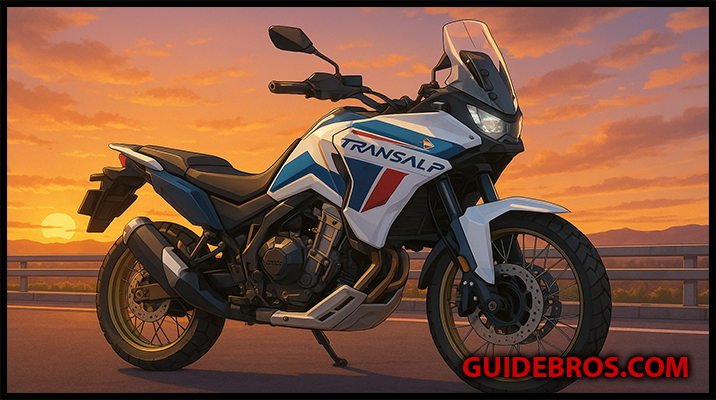
The Honda XL750 Transalp is a modern midweight adventure motorcycle built for riders who want reliable performance, comfort, and control on both highways and rough provincial roads.
Overview
The Honda XL750 Transalp adventure motorcycle continues the legacy of one of the most trusted dual-purpose bikes in the world. It combines a powerful 755cc engine, stable suspension, and modern electronics to support both daily commuting and long-distance touring. Riders appreciate its predictable handling, balanced weight, and dependable fuel efficiency. The bike is designed to handle changing road conditions, including city traffic, highways, mountain roads, and light off-road terrain. This combination makes it a practical choice for riders who want one motorcycle for multiple riding situations.
Honda XL750 Transalp Key Specifications
| Specification | Details |
|---|---|
| Engine | 755cc parallel twin, liquid-cooled, 8-valve, Unicam |
| Power | 90.5 HP @ 9,500 rpm |
| Torque | 75 Nm @ 7,250 rpm |
| Transmission | 6-speed manual with assist/slipper clutch |
| Fuel Tank | 16.9 liters |
| Weight (Kerb) | 208 kg |
| Seat Height | 850 mm |
| Front Suspension | 43mm Showa USD fork (200 mm travel) |
| Rear Suspension | Pro-Link monoshock (190 mm travel) |
| Riding Modes | 5 (Sport, Standard, Rain, Gravel, User) |
Performance and Riding Experience
Engine Power and Acceleration
The Honda XL750 Transalp engine performance delivers strong acceleration across low and mid-range RPM levels. Riders notice smooth throttle response during overtaking, climbing steep roads, or carrying luggage on long rides. The parallel-twin engine design improves fuel efficiency while maintaining reliable torque output. This balance helps reduce engine stress and supports consistent performance over extended travel distances.
Fuel Economy and Real-World Efficiency
Fuel consumption is one of the most important factors for adventure riders. The Honda XL750 Transalp fuel economy typically ranges between 20 to 27 kilometers per liter depending on riding conditions, speed, and load weight. Maintaining steady throttle control, proper tire pressure, and smooth gear shifting helps improve fuel efficiency. Riders who frequently travel long distances benefit from the balanced fuel tank capacity and efficient engine tuning.
Technology and Safety Features
Electronic Rider Assistance Systems
Modern safety technology plays a major role in the reliability of the Honda XL750 Transalp riding system. The motorcycle includes traction control, wheelie control, anti-lock braking, and selectable riding modes. These features help maintain stability during wet roads, gravel surfaces, and sudden braking situations. The system automatically adjusts power delivery to prevent wheel slip and improve rider confidence.
Suspension and Road Stability
Suspension performance directly affects rider comfort and safety. The Showa front fork and Pro-Link rear suspension system absorb road vibrations and maintain tire contact with uneven surfaces. Riders traveling on provincial roads or mountain terrain benefit from improved shock absorption and consistent steering response. Proper suspension adjustment also reduces rider fatigue during long-distance travel.
Strategic Riding Tips for Maximum Performance
- Maintain steady RPM levels to improve fuel efficiency and reduce engine wear.
- Use the correct riding mode when traveling on wet or rough roads.
- Check tire pressure regularly to maintain stability and braking performance.
- Distribute luggage weight evenly to improve balance during long trips.
- Schedule routine maintenance to prevent mechanical issues.
Advantages and Disadvantages Analysis
Advantages
- Reliable engine performance for daily and long-distance riding
- Balanced weight distribution improves handling
- Strong fuel efficiency for touring riders
- Comfortable riding position reduces fatigue
- Modern safety technology improves rider protection
Disadvantages
- Tall seat height may challenge shorter riders
- Limited factory accessories in base configuration
- No cruise control in standard models
- Higher purchase price compared to entry-level motorcycles
- Heavier than small displacement bikes
Efficiency Perspective and Ownership Value
From an efficiency standpoint, the Honda XL750 Transalp ownership experience provides strong long-term value. The engine design reduces maintenance frequency, while durable components extend service life. Riders who maintain proper service intervals often experience stable performance for many years. Insurance costs and fuel consumption remain manageable compared to larger adventure motorcycles. This combination of reliability and efficiency makes the motorcycle a practical investment for both commuting and touring.
Frequently Asked Questions
Q: Is the Honda XL750 Transalp suitable for beginner riders?
A: Yes. The motorcycle offers predictable handling, balanced weight distribution, and rider assistance features that support safe learning and skill development.
Q: What type of terrain can the Honda XL750 Transalp handle?
A: The motorcycle performs well on highways, city streets, gravel roads, and light off-road terrain due to its suspension design and traction control system.
Q: How often should maintenance be performed?
A: Regular maintenance is typically scheduled every 6,000 to 12,000 kilometers depending on riding conditions and manufacturer recommendations.
Final Evaluation
The Honda XL750 Transalp adventure motorcycle delivers dependable performance, balanced handling, and strong fuel efficiency for riders who want versatility in one machine. Its modern safety systems, durable engine design, and comfortable riding position support both daily commuting and long-distance touring. Riders who prioritize reliability, stability, and practical performance will find this motorcycle a dependable choice for many years of use.
Helpful Guide?
Sharing helps us create more pro-level content for you!